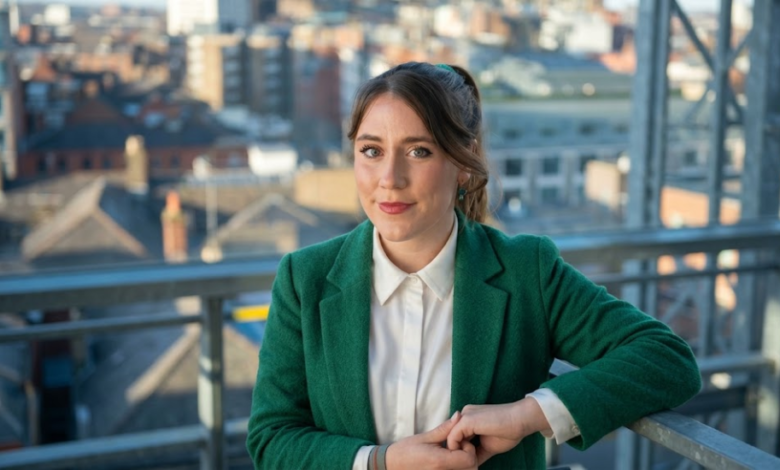
As the digital landscape evolves, few broadcast journalists have reshaped modern investigative reporting as profoundly as Marianna Spring. Serving as the BBC’s first-ever Disinformation and Social Media Investigations Correspondent, Spring has established herself as a pivotal authority on internet culture, algorithmic radicalization, conspiracy networks, and online abuse. Through her high-impact multi-platform reporting across BBC Radio 4, BBC Panorama, BBC Two, and popular podcasts like Americast, she dissects how digital falsehoods metastasize into real-world violence and democratic polarization. In an era dominated by AI-generated content, viral misinformation, and shifting platform governance, Spring’s empirical investigations sit at the very nexus of modern British media.
| Field | Details |
| Full Name | Marianna Francesca Spring |
| Date of Birth | February 21, 1996 |
| Education | Sutton High School; BA in French and Russian, Pembroke College, Oxford |
| Husband / Partner | Private / Not publicly disclosed |
| Children | None |
| Notable Roles | BBC Disinformation Correspondent; Host of Marianna in Conspiracyland; Co-host of Americast; Author of Among the Trolls |
| Current Employer | BBC News (BBC Radio 4, BBC News Channel, BBC iPlayer, BBC Sounds) |
Early Life & Background
Marianna Spring was born on February 21, 1996, and raised in Sutton, South London. Raised in a household focused on public service and health—her father being a medical doctor and her mother a family therapist and former nurse—Spring developed an early fascination with global affairs and broadcast media. She attended Sutton High School, where her aptitude for writing and public speaking earned her early regional media recognition.
Pursuing higher education at Pembroke College, University of Oxford, Spring read French and Russian between 2014 and 2018. During her undergraduate years, she actively immersed herself in student journalism, eventually serving as an editor for Cherwell, Oxford’s prestigious independent student newspaper. Her academic curriculum demanded foreign residency, leading her to study in Paris and Yaroslavl, Russia. These foreign placements proved foundational: while in Russia, she authored news dispatches for The Moscow Times and was awarded Oxford’s Ronnie Payne Prize for Outstanding Foreign Reporting in 2017. Following internships at Private Eye and The Guardian, Spring’s linguistic fluency and international perspective paved her entry into national newsrooms.
The Radio Foundations & Early BBC Career
Spring joined the BBC as a producer and researcher, quickly showing a knack for tracking digital subcultures and online social movements. In 2018, while assisting with production on BBC Two’s flagship current affairs program Newsnight, she contributed to coverage of the French Gilets Jaunes (Yellow Vests) movement. Crucially, her analysis focused on how digital platforms accelerated offline protests and how false rumors—such as a viral hoax concerning Woolworths—were inadvertently amplified by mainstream outlets.
Recognizing the urgent necessity for dedicated coverage of digital deception during the onset of the COVID-19 pandemic in March 2020, BBC News appointed Spring as its specialist Disinformation Reporter. Her earliest audio work began on BBC Radio 4 and the BBC World Service, presenting groundbreaking investigative audio series including How to Cure Viral Misinformation (2020), The Anti-Vax Files (2021), and Death by Conspiracy? (2022).
Her radio investigations offered listener-friendly breakdowns of complex internet dynamics. Rather than simply debunking false assertions, Spring pioneered an investigative approach focused on human stories. She mapped out the radicalization pipelines that pulled ordinary citizens into echo chambers, demonstrating how conspiracy narratives fractured families and influenced public policy across the United Kingdom.
Breaking Frontiers as Social Media Investigations Correspondent
By March 2022, as the scale of online harm expanded from pandemic health misinformation to foreign state propaganda and electoral interference, the BBC promoted Spring to Social Media Investigations Correspondent. To track algorithms in real time without triggering platform detection, Spring and her production team developed “Undercover Voters”—a investigative framework utilizing specialized research software and fictitious user profiles representing diverse demographic and political spectrums.
This methodology powered her major visual investigations for BBC’s Panorama. Her notable documentaries included:
- Vaccines: The Disinformation War (2021): Exposing the covert financial incentives behind anti-vaccine campaigns.
- A Social Media Murder: Olly’s Story (2022): A tragic, detailed analysis of how algorithmic recommendation engines served violent content to teenagers leading up to the murder of Olly Stephens.
- Disaster Deniers: Hunting the Trolls (2022): Confronting figures who harass survivors of mass casualty events, such as the Manchester Arena bombing.
- Inside the Rage Machine (2026): An exploration into how major platform algorithms deliberately prioritize toxic outrage to maximize user retention.
Spring’s work expanded beyond broadcast television into literature and podcasting. In March 2024, Atlantic Books published her debut book, Among the Trolls: Notes from the Disinformation Wars, documenting her direct encounters with online extremists and high-profile conspiracy theorists. Her podcasts Marianna in Conspiracyland and Why Do You Hate Me? earned top accolades at the ARIAS and the British Podcast Awards, cementing her standing as one of the audio industry’s premier investigative presenters.
Flagship Audio, Americast, and Broadcast Leadership
Beyond investigative specials, Spring has become an essential voice across the BBC’s main news channels. Joining Justin Webb, Sarah Smith, and Anthony Zurcher, she became a core co-host of Americast, bringing analytical depth to how digital political strategy, foreign troll farms, and AI deepfakes influenced the 2024 U.S. Presidential Election and its aftermath.
Operating primarily out of BBC’s Broadcasting House in London and MediaCityUK in Salford, Spring frequently joins central news broadcasts—including BBC Breakfast, BBC News at Ten, and BBC Radio 4’s Today Programme—to break down complex digital events. Whether evaluating foreign interference operations during sovereign elections, analyzing the proliferation of generative AI misinformation, or detailing the rise of misogynistic online movements, her analytical clarity bridges technical digital infrastructure with everyday public understanding.
Despite facing persistent online harassment and coordinated trolling campaigns due to the nature of her beat, Spring remains an outspoken advocate for press freedom and media literacy. Recognition on the Forbes 30 Under 30 list and accolades from the Royal Television Society highlight her role in modernizing public service journalism for the digital age.
The New Era of Digital Reporting
As online platforms replace traditional information architecture, Marianna Spring’s investigative beat represents one of the most critical fronts in modern journalism. Her work demonstrates that digital space is not an abstract realm, but a powerful force shaping real-world politics, community safety, and human psychology. Through rigorous field reporting, data analysis, and audio storytelling, she continues to set standards for how legacy broadcasters must adapt to combat deliberate deception. For deeper analysis on journalism standards, media ethics, and online platform regulations, media monitoring platforms like News Rules offer ongoing commentary on the shifting dynamics of global news outlets.